KEY TAKEAWAYS FROM ISA EXPO 2026: TRENDS IN CNC ROUTING, LASER PROCESSING, AND ACRYLIC FINISHING
April 17, 2026
Introduction
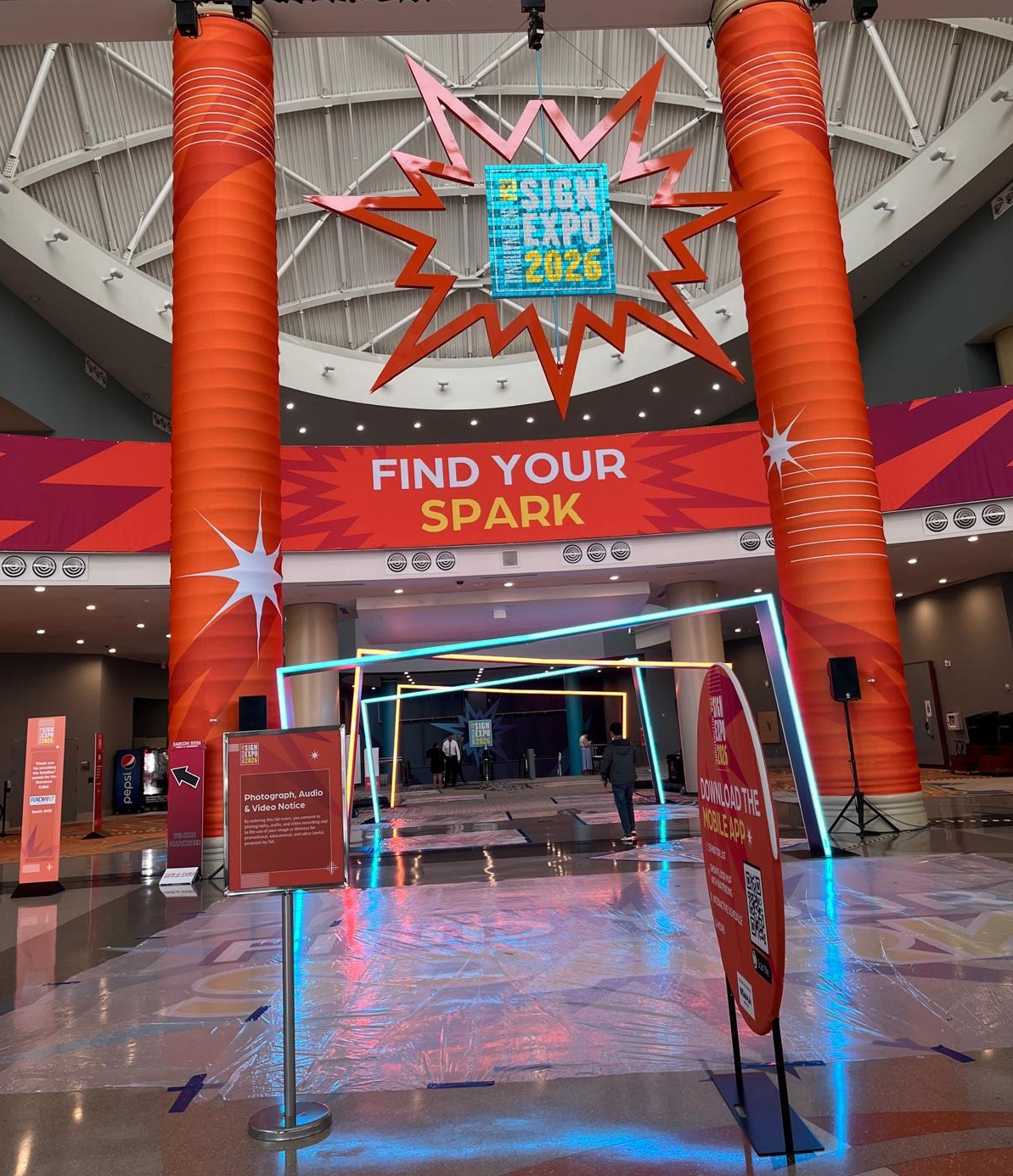
Although ISA Expo 2026 has come to an end, the conversations and observations from the show continue to provide valuable insight into the direction of the sign and display fabrication industry.
Across multiple discussions with fabricators, shop owners, and industry professionals, several consistent themes emerged — particularly around finishing quality, workflow efficiency, and process integration.
Rather than focusing on individual machines, more manufacturers are now looking at how different technologies work together to achieve consistent and high-quality results.

Increasing Focus on Finishing Quality
One of the most noticeable trends at ISA Expo 2026 was the growing emphasis on finishing — especially for acrylic applications.
In many sign and display products, the edge quality plays a significant role in the overall perception of the final product.
Common requirements include:
- smooth and transparent edges
- consistent surface quality
- clean, polished finishes for premium applications
For acrylic fabrication, processes such as edge trimming and polishing are no longer optional steps, but essential parts of production.
This shift reflects a broader market demand for higher visual standards and more refined products.
CNC Routing and Laser Processing in Modern Workflows
Another key takeaway is the continued importance of combining different processing technologies.
In practical production environments, CNC routing and CO₂ laser systems are rarely used in isolation.
Instead, they serve complementary roles:
CNC Routing
CNC routers are widely used for:
- panel shaping and contour cutting
- processing thicker materials
- aluminum and composite panel applications
- structural components in signage
Routing provides stability, repeatability, and accuracy, especially in large-format or high-volume production.
CO₂ Laser Cutting and Engraving
CO₂ laser systems are commonly used for:
- acrylic cutting (such as 1/8" and 1/4" sheets)
- detailed engraving for logos and text
- small-batch customization
Laser processing allows flexible production and delivers clean edges and fine details, particularly for decorative or branding elements.

The Role of Trimming and Edge Polishing
Beyond cutting and shaping, finishing processes are becoming increasingly important.
Trimming
Trimming is typically used to:
- refine contours after cutting
- correct minor variations
- prepare edges for final finishing
It helps improve dimensional consistency across production batches.
Edge Polishing
Polishing significantly improves the visual quality of acrylic products.
Depending on the application, different polishing techniques may be used:
- straight edge polishing for clarity and smoothness
- bevel edge polishing for enhanced light reflection and premium appearance
These processes are especially relevant in applications such as:
- awards and trophies
- decorative signage
- retail displays
From Individual Machines to Integrated Workflows
Perhaps the most important takeaway from ISA Expo 2026 is the shift toward integrated workflows.
Instead of evaluating equipment individually, more manufacturers are focusing on how different processes connect:
- CNC routing for shaping and structure
- laser cutting and engraving for detail work
- trimming for refinement
- polishing for final finishing
This workflow-based approach helps improve:
- production efficiency
- consistency across products
- overall product quality
In many cases, no single machine solves the entire process — it is the combination of technologies that delivers the best results.
Industry Direction: Efficiency and Flexibility
In addition to quality, two other themes stood out:
Faster Turnaround
Customers are expecting shorter production cycles, which requires efficient and reliable workflows.
Small-Batch Customization
There is increasing demand for flexible production, especially for custom signage, branding elements, and display products.
These trends reinforce the need for solutions that balance speed, flexibility, and quality.
Conclusion
ISA Expo 2026 highlighted a clear shift in the sign and display fabrication industry.
Finishing quality is becoming more important.
Workflow integration is replacing single-machine thinking.
And production flexibility is now a key requirement.
For manufacturers working with acrylic, aluminum, and composite materials, combining CNC routing, laser processing, trimming, and polishing into a cohesive workflow is becoming essential.
As the industry continues to evolve, the focus will not only be on what machines can do, but on how processes work together to deliver consistent and high-quality results.