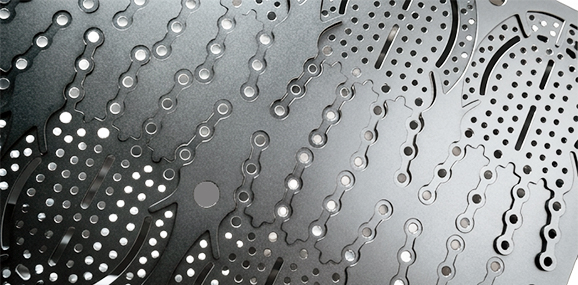
Complex titanium geometries
Small features, tight corner radii, and intricate outlines call for careful control of the cutting path.
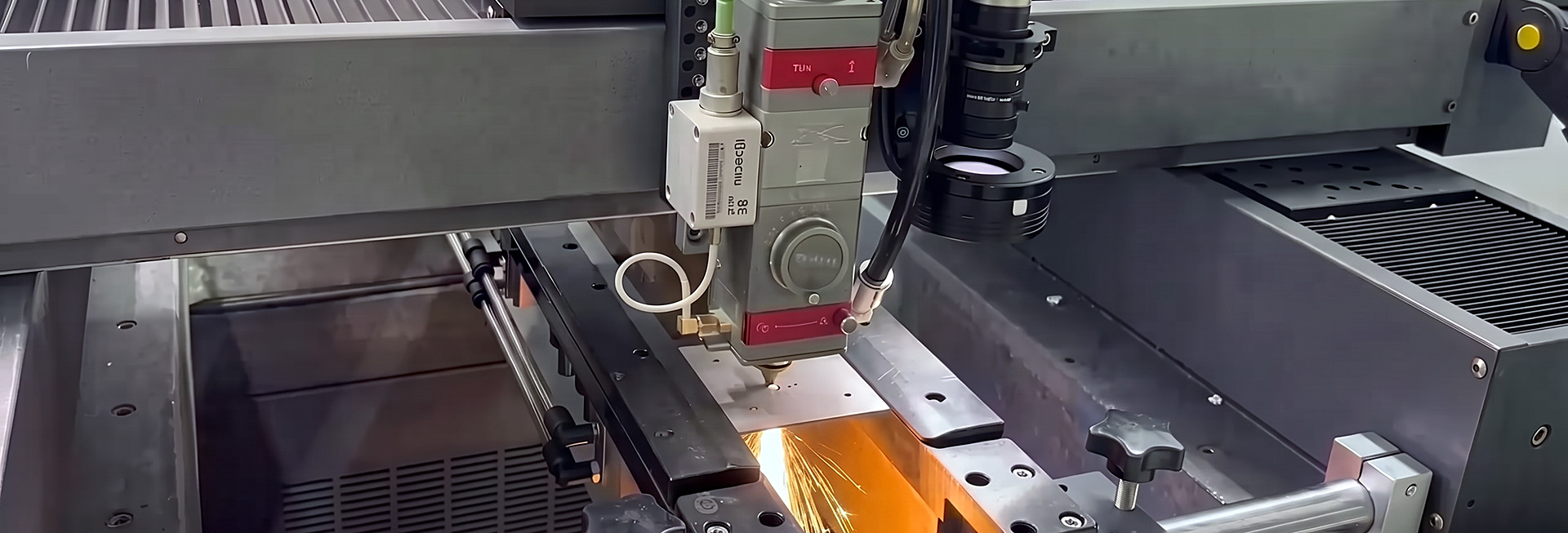
Medical device manufacturers require highly accurate processing of titanium, stainless steel, nitinol, and other biocompatible materials. Fiber laser cutting provides a precise, non-contact manufacturing method capable of producing intricate geometries, fine features, and repeatable results for surgical instruments, implant components, diagnostic devices, and medical assemblies.
Medical device components can combine compact dimensions, detailed profiles, and demanding quality expectations. The manufacturing process must hold alignment and consistency while accommodating intricate designs.
Small features, tight corner radii, and intricate outlines call for careful control of the cutting path.
Production teams need repeatable results across components and batches, with attention to heat effects and edge quality.
Small workpieces and positional variation can make setup and repeatable registration especially important.
Manufacturers need to move between development iterations and production work without sacrificing process control.
Mintech custom fiber laser system combines a rigid machine structure, precision feedback, and integrated vision to support accurate titanium processing.
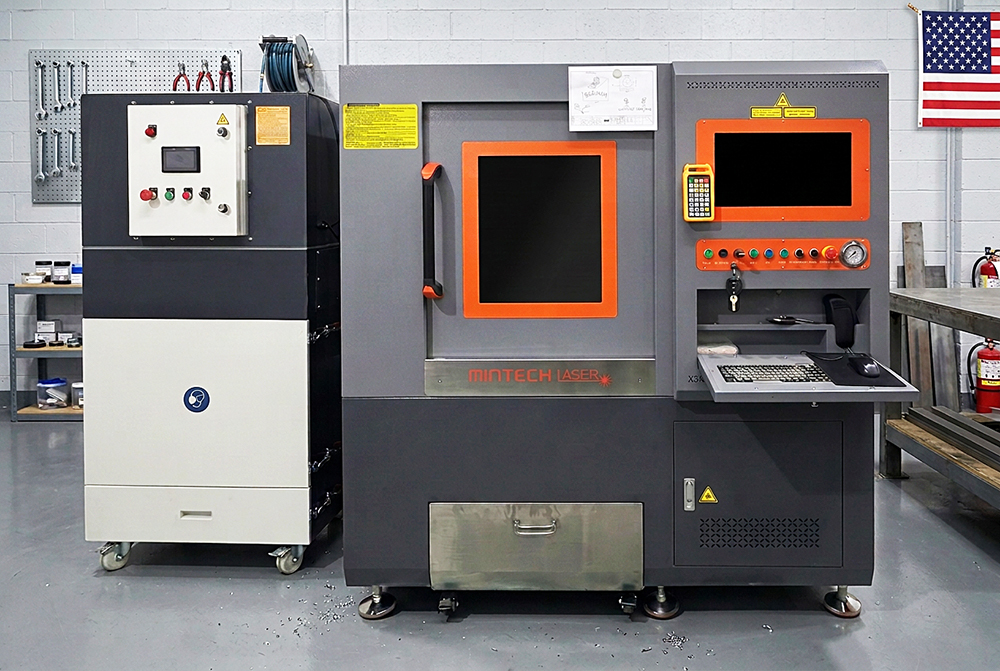
| Laser source | 3,000 W continuous-wave (CW) fiber laser |
|---|---|
| Working area | 24 × 24 in class / approximately 600 × 600 mm |
| Cutting thickness | 0.3–3.0 mm |
| Vision system | CCD automatic feature recognition and X/Y/Z compensation |
| Machine base | Granite |
| X/Y drive system | Linear motors |
| Position feedback | Renishaw linear encoders |
| CNC control | BOCHU laser control with vision integration |
| Workholding | Pneumatic clamping |
| Positioning accuracy | ±0.01 mm |
| Repeat positioning accuracy | ±0.005 mm |
| Approx. machine weight | 1,000 kg / 2,205 lb |
The system brings laser processing, precision motion, and vision-based alignment into a coordinated workflow.
A high-energy fiber laser provides a narrow cutting kerf and supports fine-feature processing on compatible titanium thicknesses.
Camera-based feature recognition helps identify reference features and apply positional compensation before processing.
Linear motors and encoder feedback support controlled motion and repeatable positioning throughout the programmed process.
Fiber laser systems can process titanium, stainless steel, nitinol, and other metals commonly used in medical device production.
CCD vision systems help identify part features and automatically compensate for positional variations, improving processing accuracy.
The published specifications show ±0.01 mm positioning accuracy and ±0.005 mm repeat positioning accuracy.
Surgical instrument components, implant parts, diagnostic device components, and precision medical assemblies may benefit from laser processing.
Fiber laser cutting provides exceptional precision, minimal heat-affected zones, and clean edge quality when processing titanium. This helps manufacturers produce intricate medical device components while maintaining material integrity and consistent part quality.
Automated CCD vision alignment detects part position and orientation before processing, allowing the laser system to make real-time corrections. This improves cutting accuracy, reduces setup time, and helps ensure consistent results for high-precision medical components and surgical device applications.
These are particularly valuable because they target additional keywords such as fiber laser cutting, titanium medical components, CCD vision alignment, medical device manufacturing, and cutting accuracy without sounding overly optimized.
Mintech’s system delivers enhanced precision, workflow flexibility, and production repeatability.
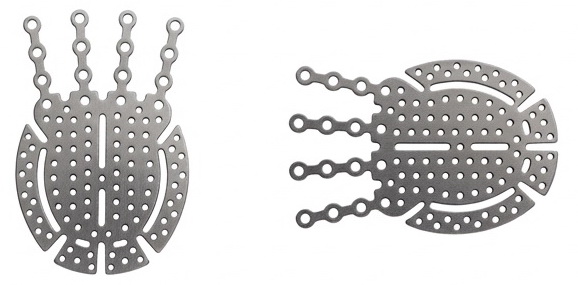
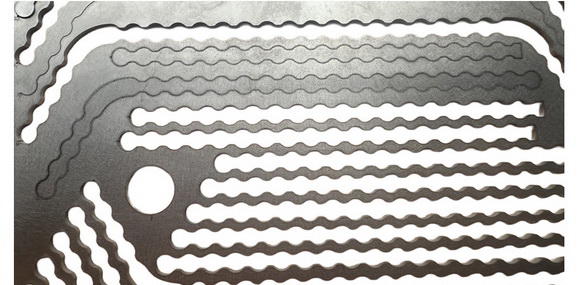
Talk with Mintech about fiber laser cutting, CCD vision integration, workholding, and the requirements of your material and part geometry.
Read Mintech blog about precision laser cutting for medical devices ↗